
Plastic Playgrounds of Childhood

Playgrounds have existed for decades. They are socially acceptable places for little children to go and, obviously, play. Not a new or odd concept for anyone. However, I strongly believe that even the things that seem very normal should regularly be questioned, improved, and documented.
I have been a mother for almost ten years. Trips to the playground have been a regular part of our life. During those trips, I have made some observations which I find are quite interesting and telling. When you see something repeated in different playgrounds, in different islands, by different people over the course of many years, it becomes a pattern that is worth addressing, exploring, and even documenting.
Some observations are not very significant rather patterns I have noticed which seem very logical and sensible to me. For example, evenings (and nights) are the time of day when you will find the highest attendance of kids at parks. Reasons could range from the fact that most kids go to school during mornings, it is hotter in the morning than evenings, people tend to sleep in during weekends, and the custom that we have in our society that evenings are for kids to go out and play.

And then there are other observations that puzzle, concern, and sometimes irk me.
The first one is that some kids are not allowed to stay for long at the park. I have seen this way too many times to not generalise. It is almost like the parent has no empathy for the kid. How difficult would it be for a young child to see the playground, to feel the desire to play, but be allowed to play for only a few minutes and go? Worst case scenario is when the parent allows the kid to play on the swing or something else while they are on their way from one place to another, for example, the quran class to home. The kid would literally get five minutes. Even 15 minutes is not enough for the kids to relax, get some exercise, make social connections with other kids, have fun or start a play of their own. I do realize that every park visit cannot be one or two hours long and sometimes you have to have a shorter visit but this is not about those kinds of exceptions. This is an assumption I am making about a pattern I noticed about adults' perception of how much time is enough for a child to spend at the playground at a time.
The second observation leads me to think that we (adults) have taken play from children, repackaged it and offered it back to children on a plastic platter, with little consideration of what healthy play is. Let's break this down into three parts.
Firstly, have you noticed that almost all parks look the same? (except a few parks which is the exception). It is almost like everyone is buying the same kinds of brightly coloured park equipment from the same place or that everyone is making the equipment from the same moulds or blueprints.

Sure. A rocking horse is fun. But a rocking car, a rocking whale, a rocking dolphin all in the same park, does not make sense to me. Does one park really need multiple rocking things? Looks like a way to increase the amount of equipment without putting much thought into it. Do kids even like rocking things that much?
The main attraction is the big playhouse with two or three slides. The slides barely even function as a slide because the slope is so straight that it doesn't even let kids slide properly if they are a bit older.
I don't think parks should have a typical structure; a big playhouse, a swing set and some rocking things. I think every park should be as innovative and fresh as possible. I think there should be a huge variety because playgrounds can come in all different shapes and colours.
One way to encourage creative play would be to add things like a platform. Things that don’t suggest only one kind of activity. Kids would automatically start listening to their own intuition and their bodies and play on it in different ways. They might climb on it, use it as a stage, use it as a hill to look in the distance, etc. Directing their play for them is a disservice we do to kids. It limits their imagination and stops their bodies from doing natural things that they need to do for healthy growth.
Next, I believe that we direct play too much. Play comes naturally to children. We don't have to teach them how to play. When we use the typical playground structure repeatedly and in every single park, it sets a precedent. Rock on the rocking horse. Swing on the swing. Slide on the slide. And parents will heavily enforce this too.

Which brings me to the last part of this observation which are the rule breakers. A child or group of children can sometimes be observed who always go beyond these rules. They might either climb up on the slide instead of sliding, climb on top of the playground's highest point, climb on the swing’s bars, or make up more adventurous and riskier plays, often with other children. The noteworthy thing about these kids is that they have no parents accompanying them. This begs the question: would they have broken those barriers if the parents were there to supervise them? Probably not. These kids seem to be very skilled in things like climbing, jumping etc. They seem to have surpassed the plastic playground and in need of a more sophisticated avenue. Maybe all kids would become like that if we let them be free to explore for extended periods of time and be taken to the playground regularly. That confirms the point i was making about needing to create more sophisticated and innovative playgrounds that encourage open-ended play.
I also wonder whether there should be different playgrounds for toddlers and bigger kids, or different areas of the park designated for different age groups? And what age does a child stop needing to go to a playground to play? Should play only be confined to playgrounds? My son asked me a question recently. “Do adults have playgrounds?” I told him I didn't know whether they existed. Maybe things like ragerooms, escape rooms, arcade game centers, might count as playgrounds for adults. but I thought to myself whether adults need more open-ended and outdoor playgrounds too. I personally think we do.

The third observation is that sometimes big kids come with smaller kids and they do everything for them. They are barely able to carry the kid because they are children themselves. The toddler doesn't even need to be carried. The result is that the small kid doesn't get to explore and learn skills by themselves and the big kid doesn't get to have fun and explore freely by themselves. But onlookers seem to think this is cute and “responsible” . I think its parentification. Although this particular observation is not as common as the others, it does happen a lot.
Another observation I made is that, although this rarely happens, playtime is ruined by other children or their parents. Some kids can be overly touchy, or their parents. Some kids could be downright bullies and their parents don't seem to be supervising them or intervening. For me, I find it very hard to protect my kids from such children and parents. I end up leaving instead of confronting.
The last observation is the general lack of maintenance of playgrounds. There was a particular incident where there was poop on a slide and I had to stay away from that playground for days because it hadn't been cleaned. Sometimes pieces of equipment could come off too, which end up becoming playthings for the children. Ironic. It could be days of weeks before they are properly maintained or repaired depending on the park. And when they do close the parks for maintenance, they can take a long time.

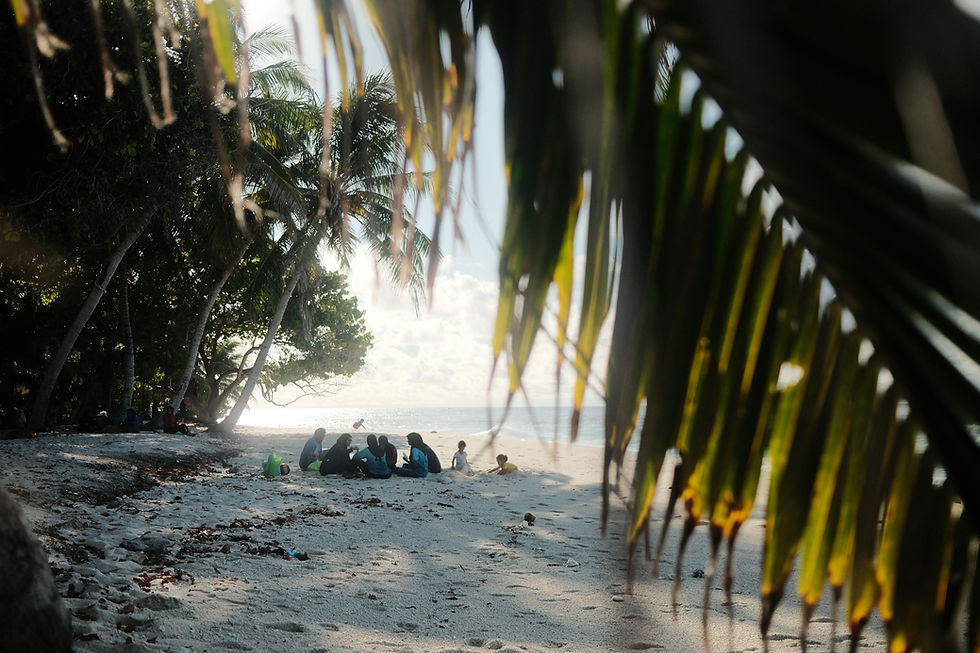
The importance of outdoor play for children has been highlighted by many like the WHO. In some parts of the world, there are attempts at pushing back at this robbing of childhood. There are nature schools and adventure playgrounds. There are communities of people in different parts of the globe that emphasize the importance of taking back children’s childhoods and letting kids be kids. It is an act of rebellion in many ways.
Play is not an accessory. It's not a reward kids get on the weekend after studying everyday during the week. Play is the very essence of being a child. It allows children to develop all the skills they need to develop. It is a way for them to cope with the stresses they go through life. (Yes school is highly stressful)
This is not just about playgrounds. I think it is a symptom of a bigger issue. A small holograph of the bigger picture that is how we as a society and our generation view young children, play, and childhood. And I strongly believe that it is directly connected to other social issues like high screen time among kids. Maybe we need to ask more questions, big and small. What is play? As adults, how much priority should we give to fostering children’s play?


Comments